
At MIL, we believe that leadership takes many forms—and that the stories behind our leaders are just as important as the roles they play. In honor of Asian American, Native Hawaiian, and Pacific Islander (AANHPI) Heritage Month, we’re proud to spotlight the voices of AANHPI leaders across our organization. Through personal stories, cultural reflections, and words of wisdom, these team members share how their heritage has shaped their journey and how they continue to lead with purpose, resilience, and heart.
AANHPI Leadership Spotlight: Tina Simanivanh
Can you share a bit about your cultural background and what it means to you?
Tina: The Laotian cultural background is deeply spiritual and community-focused shaped by centuries of tradition and religion. My heritage has made a huge impact on my life and has influenced me in my personal style. Important values include compassion, empathy, mindfulness, and respect for elders.
What are some traditions or values from your culture that have helped guide your leadership style?
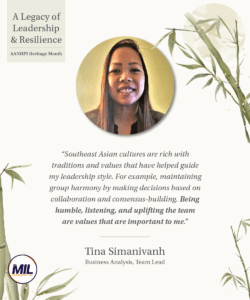
Tina: Southeast Asian cultures are rich with traditions and values that have helped guide my leadership style. For example, maintaining group harmony by making decisions based on collaboration and consensus-building. Being humble, listening, and uplifting the team are values that are important to me.
What has been one of your most rewarding experiences as a leader at MIL?
Tina: The most rewarding experience as a leader at MIL is mentoring junior employees and helping them develop into great team players, contributors, and eventually a leader one day. Watching that person grow over time brings a sense of fulfillment.
AANHPI Leadership Spotlight: Kinjal Kothari

Can you share a bit about your cultural background and what it means to you?
Kinjal: As someone born in India, raised in a Hindu household, and now practicing Buddhism, my cultural background is a blend of deep-rooted traditions and evolving personal beliefs. I come from a Gujarati family, where customs such as vibrant festivals, strong family ties, and a spirit of community service deeply influenced my upbringing. Gujaratis are well known for their hospitality and welcoming nature—values that shaped how I connect with others, both personally and professionally.
What does this year’s theme, “A legacy of Leadership and Resilience,” mean to you personally?
Kinjal: To me, this year’s theme – “A Legacy of Leadership and Resilience” – is deeply personal. As a first-generation immigrant, I carry with me the stories of generations who led not through titles or recognition, but through quiet strength, hard work, and unwavering commitment to their communities. In my culture, leadership is often shown in everyday actions: welcoming others with warmth, showing up for family and neighbors, and rising to challenges with dignity and resolve.
I’ve made a conscious effort to carry the values I learned growing up in India into my life in the U.S. Respecting others, embracing differences, working hard, and helping those in need are not only part of my heritage—they’re principles I strive to live and lead by every day.
Practicing Buddhism has further grounded me in mindfulness, compassion, and a sense of responsibility to uplift those around me. I believe that leadership is not just about direction—it’s about service, empathy, and building trust.
How do you stay resilient during challenging times?
Kinjal: I stay resilient in challenging times by staying grounded in the values that have shaped me—respect, perseverance, and compassion. Growing up in a Gujarati household and practicing Buddhism has taught me to approach difficulties with both determination and mindfulness. Instead of reacting impulsively, I take a step back, assess the situation calmly, and focus on what I can control.
I’ve also learned that resilience doesn’t mean facing everything alone. I lean on trusted colleagues, ask for input when needed, and remain open to learning from the experience. Helping others, even during my own challenges, also keeps me centered—it reminds me that leadership is about service, not just solutions.
Ultimately, resilience for me is about showing up, staying focused on the bigger picture, and leading with empathy—even when the path forward isn’t easy.